What to Do When Asked for Proof of Onward Travel
Asked for proof of onward travel at the airport or immigration? Here's what to do, which countries require it, and how onward ticket services can save your trip.

Asked for proof of onward travel at the airport or immigration? Here's what to do, which countries require it, and how onward ticket services can save your trip.
Get a verifiable flight reservation accepted by immigration & airlines in just 30 seconds

You've just landed in Thailand after a 14-hour flight. Your carry-on is digging into your shoulder, jet lag is kicking in, and all you want is to get through immigration and find your hostel. Then the officer looks up from your passport and says: "Where's your proof of onward travel?"
Or maybe you're still at the gate in Istanbul, and the airline agent won't give you your boarding pass to Vietnam because you only have a one-way ticket. Your flight leaves in 45 minutes.
We've been there. And trust us - these situations are way more common than you'd think. The good news?
An onward ticket service like dummy-flights.com can bail you out in minutes, sometimes even while you're standing at the counter.
Proof of onward travel is documentation showing that you plan to leave a country before your visa or entry permit expires. It doesn't have to be a flight back home - it just needs to be a ticket showing you're heading somewhere else.
For example, if you're flying into Indonesia on a 30-day visa-free entry, your proof of onward travel could be a flight from Bali to Singapore two weeks later. Immigration doesn't care where you're going next - they just want to know you're leaving.
Countries and airlines require this for a simple reason: they want to make sure you're not planning to overstay your visa or immigrate illegally. For airlines, there's also a financial incentive. If you get denied entry at your destination, the airline has to fly you back - and they'd rather not foot that bill.
Most countries have explicit requirements for proof of onward travel, including:
United States
United Kingdom
New Zealand
Philippines
Indonesia
Thailand
Brazil
Peru
Costa Rica
Panama
But here's the tricky part - enforcement is inconsistent. You might fly into Thailand five times without anyone asking, and then on your sixth trip, the check-in agent in Singapore refuses to let you board without seeing an exit ticket. We've seen travelers get stopped at immigration in the Philippines, while others walk right through.
The reality is that any country can ask for proof of onward travel, even if it's not officially required. And increasingly, it's the airlines - not immigration - doing the checking at departure.
There are three main checkpoints where proof of onward travel comes up:
At airline check-in: This is the most common place to get stopped. Airlines face fines and repatriation costs if they let someone board who gets refused entry, so check-in agents often ask for your return or onward ticket before issuing a boarding pass. Budget airlines like AirAsia, VietJet, and Scoot are particularly strict about this.
At the boarding gate: Sometimes agents do a secondary document check right before boarding. If you've already checked in online and skipped the counter, this is where it might catch up with you.
At immigration on arrival: The officer stamping your passport may ask to see proof that you'll be leaving before your visa expires. This happens more often in Southeast Asia, Central America, and when you've got stamps showing frequent visits to the same country.
Here's a scenario that plays out at airports every single day: You're a digital nomad flying from Kuala Lumpur to Bangkok with a one-way ticket. You've done this route before with no issues. But today, the AirAsia agent asks for your return flight. You explain that you're planning to take a bus to Cambodia in a few weeks, but bus tickets don't count - they want a flight reservation.
Your options are suddenly limited. You can try to book a refundable flight on your phone, but you've only got 20 minutes before the gate closes, the airport wifi is spotty, and your credit card keeps getting declined because you forgot to notify your bank about international travel.
Another common situation: You're standing at immigration in Manila after flying in from Tokyo. The officer asks for your onward ticket, and you don't have one. Now you're facing the possibility of being sent back on the next flight - at your own expense.
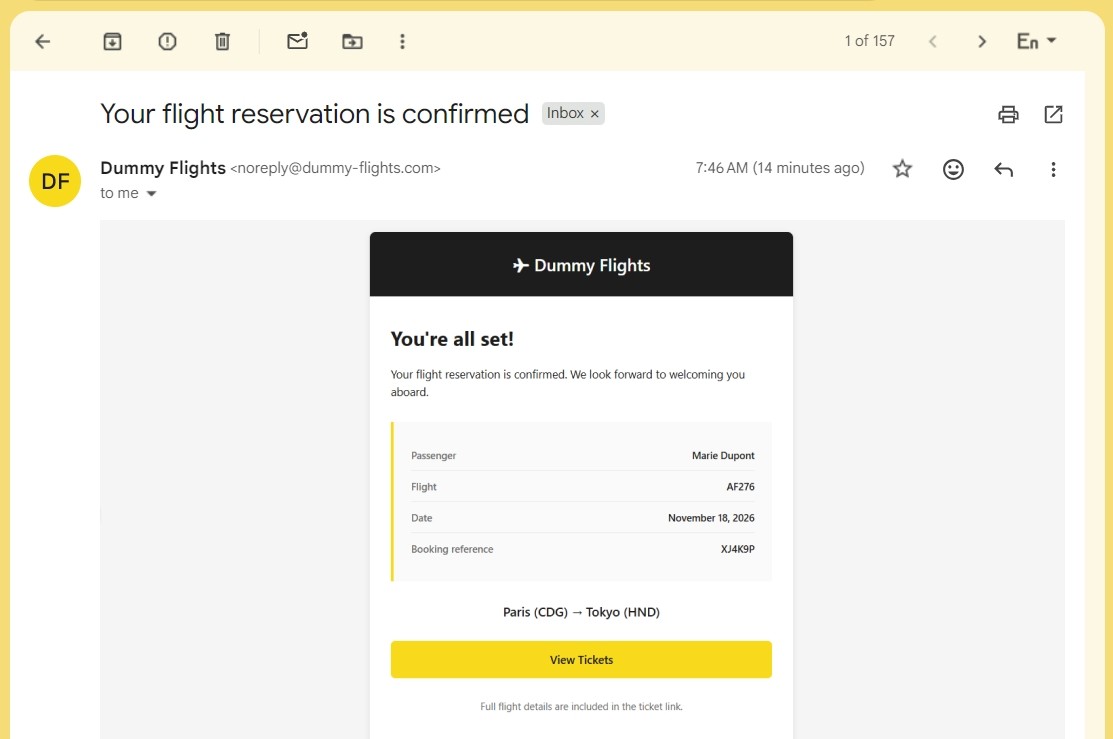
This is where services like dummy-flights.com come in. Instead of buying a full-price flight you might never use, you pay a small fee (usually between $13 and $20) for a temporary flight reservation in your name.
Here's the process: You fill out a form with your name, travel dates, and desired route. The service creates a real flight reservation with a valid booking reference (PNR) that shows up in the airline's system. You receive the reservation via email, usually within minutes. The reservation stays active for 24-48 hours, which is plenty of time to get through check-in and immigration.
These aren't fake tickets - they're genuine reservations made through the same booking systems that travel agents use. The difference is that the ticket hasn't been paid for, so it eventually expires. But for the purpose of showing proof of onward travel, they work perfectly.
You've got a few other options for proof of onward travel, but they all have drawbacks:
Buy a refundable ticket: This can work, but you'll need to float the cost upfront (sometimes hundreds of dollars), deal with cancellation processes, and hope the refund actually comes through. Some airlines refund only in vouchers, not cash. Others charge change fees. And if you're scrambling at the airport with 30 minutes before your flight, there's no time to research refund policies.
Book the cheapest one-way flight you can find: Better than a full-price refundable ticket, but you're still spending $50-100+ on a flight you probably won't take. If your plans change, that money is gone.
Try to talk your way through: We've seen travelers negotiate successfully with check-in agents, and some airlines even have waivers you can sign accepting responsibility if immigration denies you entry. But this is hit-or-miss. You might get a sympathetic agent, or you might get someone who won't budge. Not worth the gamble on a trip you've been planning for months.
Fake it with Photoshop: Don't. Falsifying travel documents can get you blacklisted from a country permanently. Immigration systems are more sophisticated than you think, and the savings of a few dollars isn't worth the risk.
To get the most out of services like dummy-flights.com:
Book your reservation close to your travel date. Since reservations typically expire after 48 hours, don't book too far in advance. The night before your flight is usually ideal.
Choose a realistic route. Pick a destination that makes sense for your trip. If you're entering Thailand on a 30-day visa exemption, book an onward flight within 30 days. If your ticket is for 90 days later, that's going to raise questions.
Have both digital and printed copies. Save the reservation to your phone, but also print a copy if you can. Some immigration officers still prefer paper.
Double-check your passenger details. Make sure your name matches your passport exactly. A typo could create more problems than it solves.
Verify the PNR works. Most airlines let you look up reservations on their website using the booking reference. Test it before you head to the airport.
Yes, having a tourist visa doesn't exempt you from showing proof of onward travel. Airlines and immigration may still ask for it. The visa gives you permission to enter, but they still want to see that you have plans to leave within your authorized stay period.
It depends. Airlines and immigration often prefer flight tickets because they're easier to verify. Bus tickets sometimes work, especially at land borders, but many airport check-in agents specifically ask for a flight reservation. If you're flying in, it's safer to have a flight booked.
You'll need to purchase a ticket on the spot or miss your flight. The airline won't let you board without it, and you won't get a refund on your original ticket. This is why having an onward ticket service bookmarked on your phone is smart - you can generate a reservation in minutes.
Yes. These services create real flight reservations through legitimate booking systems. You're not using a fake document - you're using an unpaid reservation, which is a normal part of the booking process. Embassies even accept these reservations for visa applications.
They might. While many immigration officers just glance at the document, some will actually check the booking reference in their system. This is why you want a real reservation from a legitimate service, not something you created in Photoshop.
There's nothing to cancel. The reservation expires automatically after 24-48 hours since it was never actually purchased. You don't need to take any action.
Requirements are less strict at land borders, but immigration officers can still ask. If you're crossing between Thailand and Cambodia by bus, for example, having some kind of exit plan to mention is smart. But you're less likely to be stopped than at an airport.
Budget airlines in Asia (AirAsia, VietJet, Scoot, Cebu Pacific) and European budget carriers (Ryanair, Wizz Air) tend to be the most rigorous about document checks. Long-haul carriers from the US, UK, Canada, and Australia to Southeast Asia also often check, since they're liable if you're denied entry.
Book it the night before or the morning of your departure. Since most reservations expire within 48 hours, you don't want to book too early. Time it so your reservation is active when you check in and clear immigration.
This is separate from proof of onward travel, but it comes up in similar situations. Some countries require proof of accommodation and sufficient funds (Thailand technically requires 20,000 baht per person). Having a hotel booking confirmation and a recent bank statement or credit card ready can help.
The proof of onward travel requirement catches thousands of travelers off guard every year. Some get turned away at check-in, others end up buying overpriced last-minute flights they'll never use, and a few even get sent home at immigration.
You don't have to be one of them. Save a link to dummy-flights.com on your phone before your next international trip. It takes five minutes to set up a reservation, costs less than a meal at the airport, and could save you from missing your flight - or worse, getting denied entry to a country you've been looking forward to visiting.
Travel is unpredictable enough without adding unnecessary stress. Having a backup plan for proof of onward travel is just smart trip prep.