Samantha Carter
· Updated
Are Dummy Tickets Legal for Your Visa? Guide for 2026
Learn when a dummy ticket is legal for your visa, which consulates ask for a flight reservation, and why you should never call it a paid ticket.
 Samantha Carter
· Updated
Learn when a dummy ticket is legal for your visa, which consulates ask for a flight reservation, and why you should never call it a paid ticket.
A real reservation in the airline's system with its own booking code (PNR).

The question we hear most often at Dummy Flights is whether dummy tickets are actually legal for visa applications.
The short answer?
Showing a reservation is normal, as long as you present it as a reservation. A reservation from us is a real airline booking that hasn't been paid for yet, and many consulates ask for one instead of a paid ticket.
This guide explains when a dummy ticket is legal, where consulates ask for one, and how to book one safely through our service.
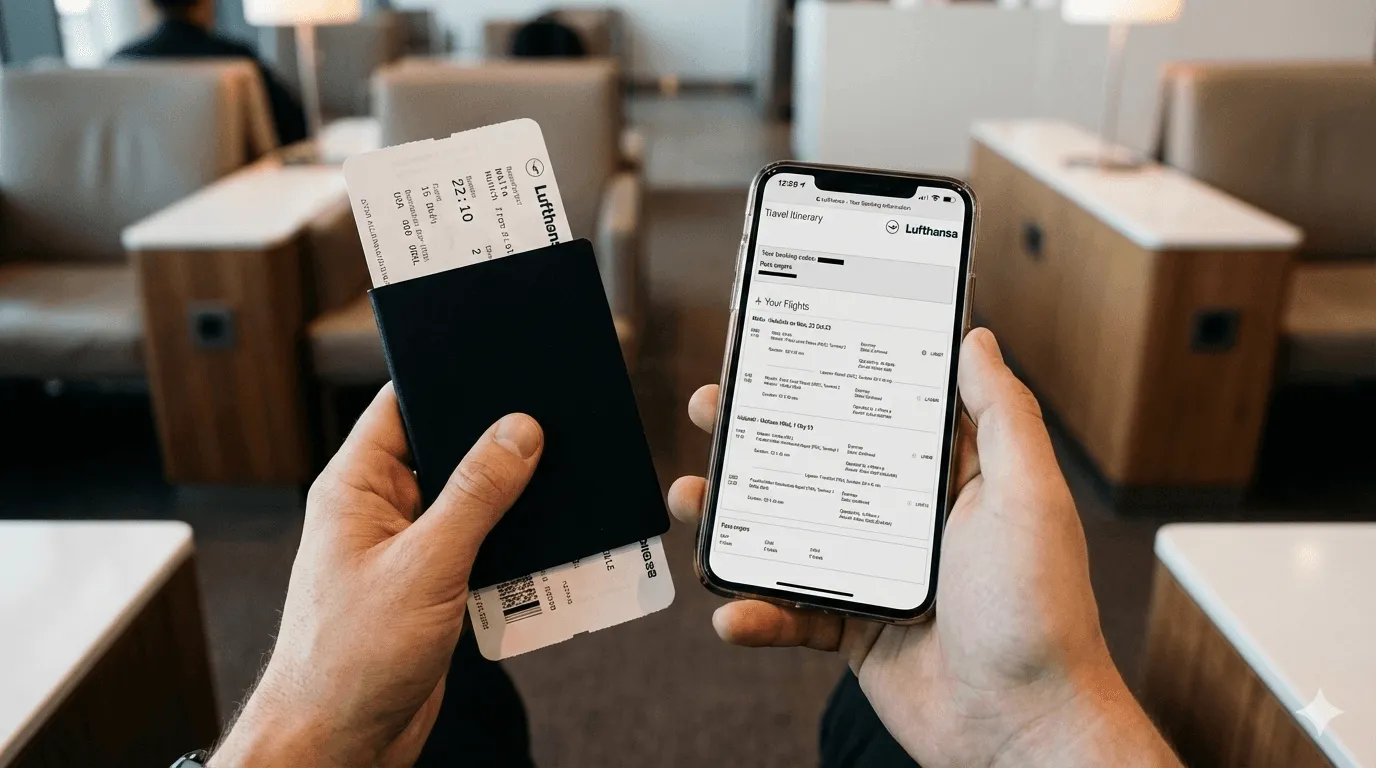
Before diving into legality, let's establish what we're actually discussing. A dummy ticket isn't a fake or photoshopped document; it's a real booking made through an airline or travel agency system. The crucial difference from a paid ticket is that nobody pays the airline fare, so it has no ticket number and you can't fly on it.
Every dummy ticket we create at Dummy Flights includes:
The key word here is "genuine": these are actual reservations that consulates and airlines can look up on the airline's website using the booking reference. A reservation shows as booked but not ticketed, because it hasn't been paid for and has no ticket number.
Many consulates advise applicants not to buy a ticket until the visa is issued. Here's why:
Visa officers know applicants shouldn't have to risk losing money on non-refundable tickets before their visa is even granted. Getting a visa is not guaranteed, and embassies do not want travelers to lose money on non-refundable flights.
Think about it: if embassies required fully paid tickets and then denied your visa, you'd lose hundreds or thousands of dollars. That's neither fair nor practical.
Many visa checklists ask for a flight reservation rather than a purchased ticket, and some visas don't ask for a flight booking at all. Let's look at specific positions:
Schengen: The EU Visa Code lists a "reservation of or return or round ticket" among the documents a consulate may ask for, and most Schengen consulates ask for a flight reservation rather than a paid ticket. Book it the day before you submit, so it's live when you hand in your file. It will usually have expired by the time the consulate decides, and consulates can check. If yours asks for a reservation that's still valid when they decide, or for a paid ticket, this isn't the right product.
UK: UK visitor visas don't need a flight booking. GOV.UK lists flight bookings as less useful evidence, unless you're transiting.
Canada: Optional for Canadian visitor visas. Present it as a reservation, never as a ticket.
United States: US visas don't need a flight booking. The State Department says not to buy tickets until you have the visa. Visa-free arrivals on an ESTA need an issued return or onward ticket. A reservation isn't enough.
UAE: If an airline is arranging your UAE visa, it needs an issued ticket on that airline. Through a UAE travel agent or hotel, ask them first.
Consulates ask for travel itineraries to check that an applicant plans to visit and then leave. A reservation shows:

Booking through Dummy Flights is straightforward:
Go to our booking page, choose one-way or round trip, then search your route and date and pick a flight from the results.
Provide:
One-way $15 per passenger. Round trip $19 per passenger.
Pay by card, through Stripe's secure checkout.
Once it's booked, we email you the reservation PDF with the airline booking code (PNR).
Before you submit it, open the airline's Manage Booking page and enter your surname and the airline booking code. If it doesn't show, message us straight away.
At Dummy Flights:
Showing a reservation as your travel plan is normal, and many consulates ask for one instead of a paid ticket. Ours is a real airline booking that hasn't been paid for yet, so never say or write that it's a paid ticket.
Consulates and airlines can look up a booking reference on the airline's website. A real reservation shows up as booked but not ticketed while it's live, unlike a fake PDF, which doesn't show at all.
Usually, where the consulate asks for a flight reservation: most Schengen consulates do, and so do Chinese visa centres in the UK and the Netherlands. Book it the day before you submit, so it's live when you hand in your file. It will usually have expired by the time the consulate decides, and consulates can check, so if yours wants a reservation that's still valid when they decide, or a paid ticket, this isn't the right product. Greek visas applied for in the UK and Thai e-Visas through the embassy in London need a paid airline ticket, so don't use a reservation for those. UK, US, Canadian and Australian visitor visas don't require a flight booking.
Creating a fake ticket using unauthorized or fraudulent means, such as editing a real ticket with Photoshop, is illegal and can lead to serious consequences. Legitimate dummy tickets are real reservations made in the airline's system, with a booking code you can look up on the airline's website.
A fake or tampered one can. Presenting a tampered flight ticket as proof of travel might lead to visa rejection, blacklisting, or even legal proceedings. A real reservation shows your travel plans, but it doesn't guarantee a visa. The consulate decides, and some want a reservation that's still valid when they decide, or a paid ticket.
Describe it as what it is: a flight reservation, not a paid ticket. Never say or write that it's a paid ticket. If anyone asks, say it's a reservation.
Showing a reservation as proof of onward travel is normal. The airline at check-in, the border officer and the consulate decide what they accept. A reservation is widely used as proof of travel plans, but it doesn't guarantee boarding, entry or a visa. New Zealand, and the US if you're entering visa-free on an ESTA, ask for an issued ticket. A reservation isn't enough there.
If a consulate or an entry rule asks for a confirmed or paid ticket, a reservation may not be enough. Greek visas applied for in the UK and Thai e-Visas through the embassy in London need a paid airline ticket. Where a paid ticket is required, this isn't the right product, so buy a refundable fare instead.
The risk comes from misrepresenting it, with a fake or edited ticket or by telling an official that a reservation is a paid ticket. Presented as what it is, a reservation is a normal way to show your travel plans.
For more than a decade. The European Commission's 2010 Visa Code handbook told Schengen consulates that "in general a paid return ticket is not required", and a study done for the Commission in 2012 found that 60 of the 78 consulates it sampled asked for proof of a flight reservation. Each consulate still sets its own checklist, so check yours before you book.
The legality of dummy tickets for visa applications comes down to how you use them. A real reservation from a service like Dummy Flights is a normal way to show your travel plans, as long as you present it as a reservation. Many consulates advise applicants not to buy a ticket until the visa is issued, and most Schengen consulates ask for a flight reservation rather than a paid ticket.
Our service makes a real reservation in the airline's system. Once it's booked, we email you the reservation PDF with the airline booking code (PNR). One-way $15 per passenger. Round trip $19 per passenger.
Don't risk your visa application with fake PDFs, or your money on non-refundable tickets before your visa is decided. Choose the reservation service trusted by 50,000+ travelers, and book it the day before you submit your application.
Checked October 2026.